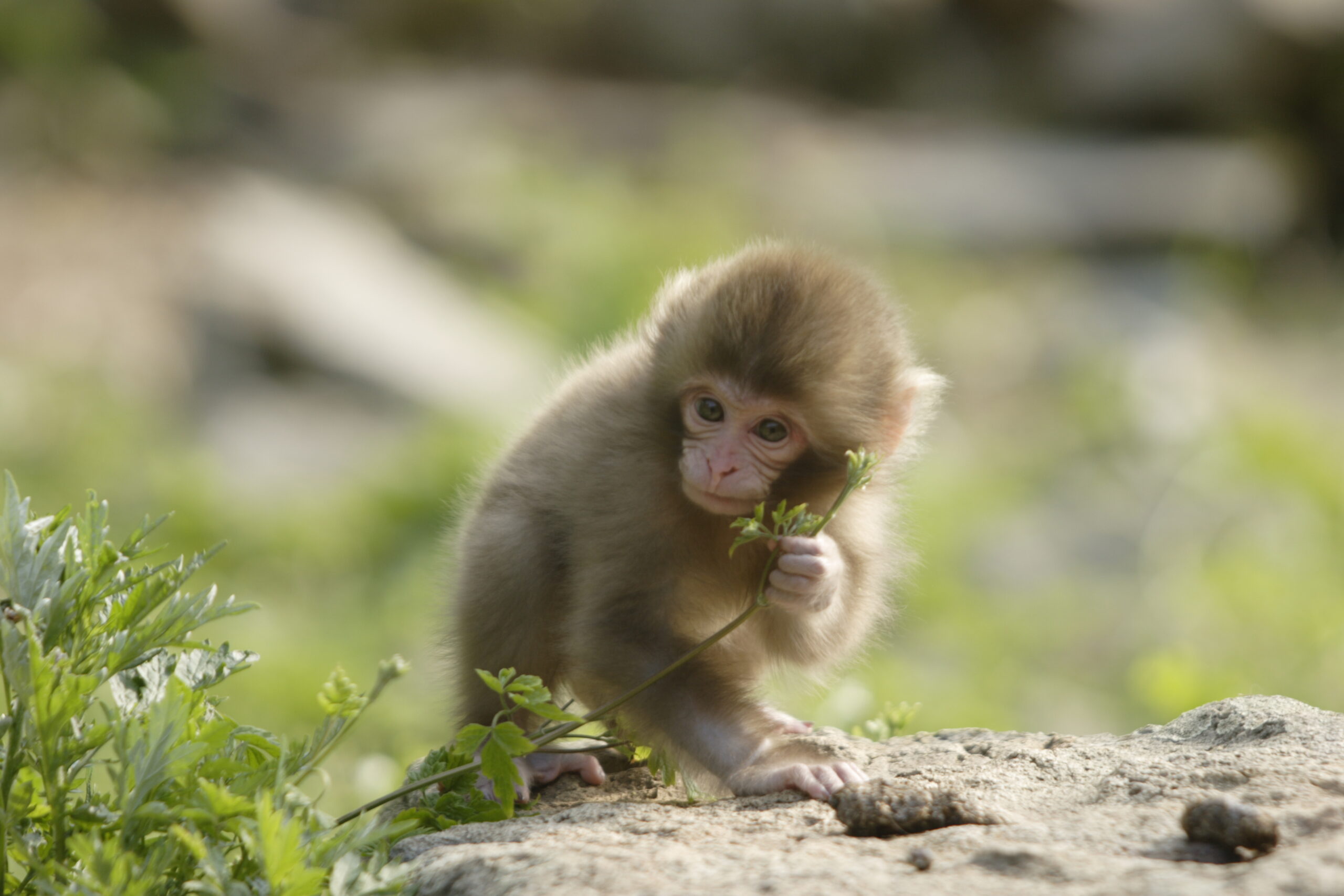
The Real Life of the World's Favorite "Snow Monkey
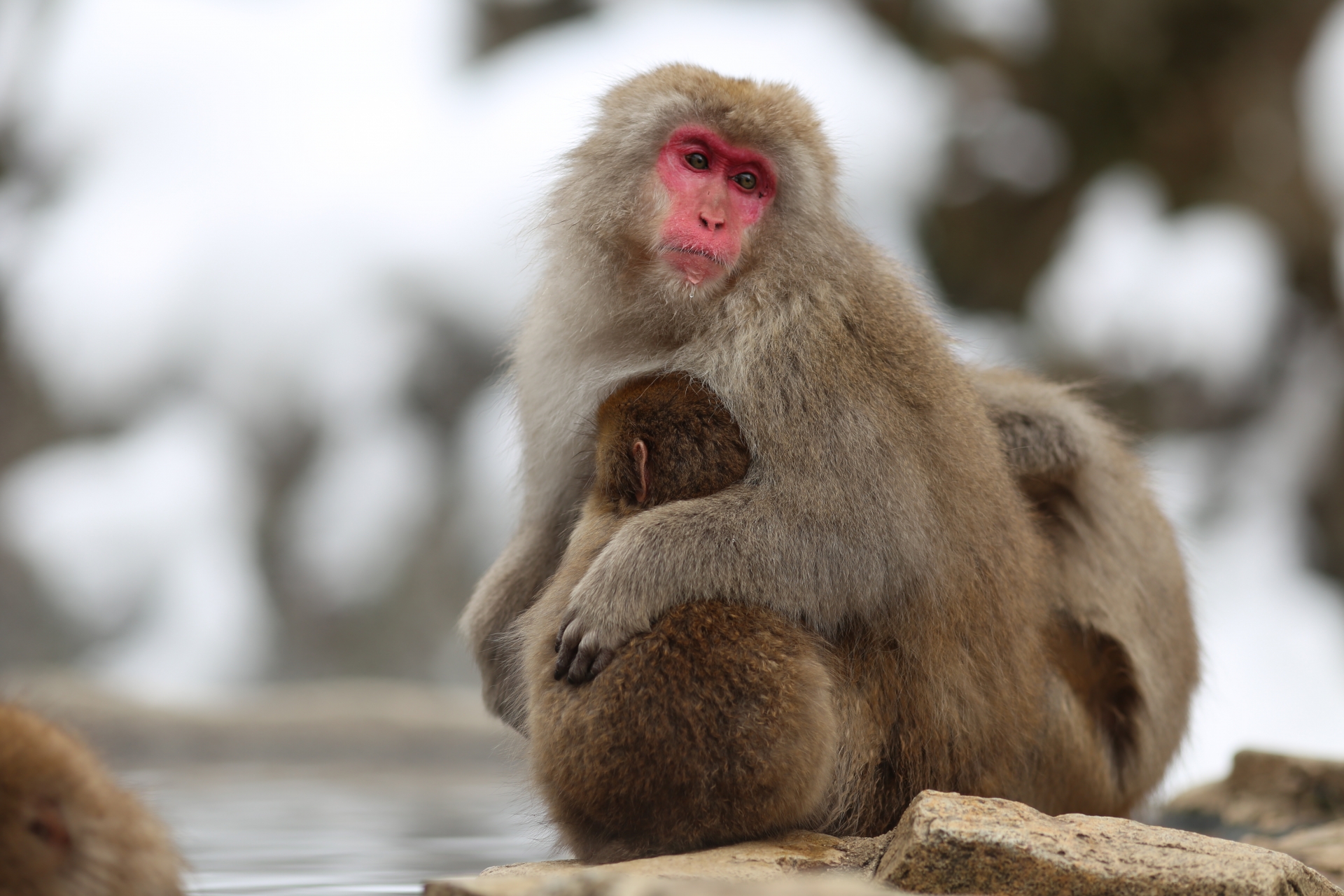

Japanese macaque monkeys in Jigokudani Yaen-koen
Beyond the Ice Age to Japan
It is believed that the ancestors of the Japanese macaque came to Japan from the continent via the Korean Peninsula during the Ice Age. The end of the Ice Age separated the continent from Japan by the sea, and the Japanese macaque is said to be the descendant of the remaining macaques. The Japanese macaque is endemic to Japan, and there is only one species of macaque living in Japan. The Yakushima macaque, which lives on Yakushima Island, is considered a subspecies of the Japanese macaque. (For this reason, they are sometimes called Hondo monkeys in contrast to Yakushima monkeys.)
The Japanese macaque is thought to have arrived in Japan 300,000 to 500,000 years ago, and has adapted to the climate and nature of Japan over its long history.
Why "Snow Monkey"?
The ancestors of the Japanese macaque, which came to Japan in prehistoric times, became widely distributed throughout Japan. They are the most northerly primate species except humans, and the Shimokita Peninsula in Aomori is their northern limit. Most monkeys are originally found in warm regions such as the tropics and subtropics. Monkeys that live in areas where snow falls are rare, and Japanese monkeys are known as "snow monkeys.
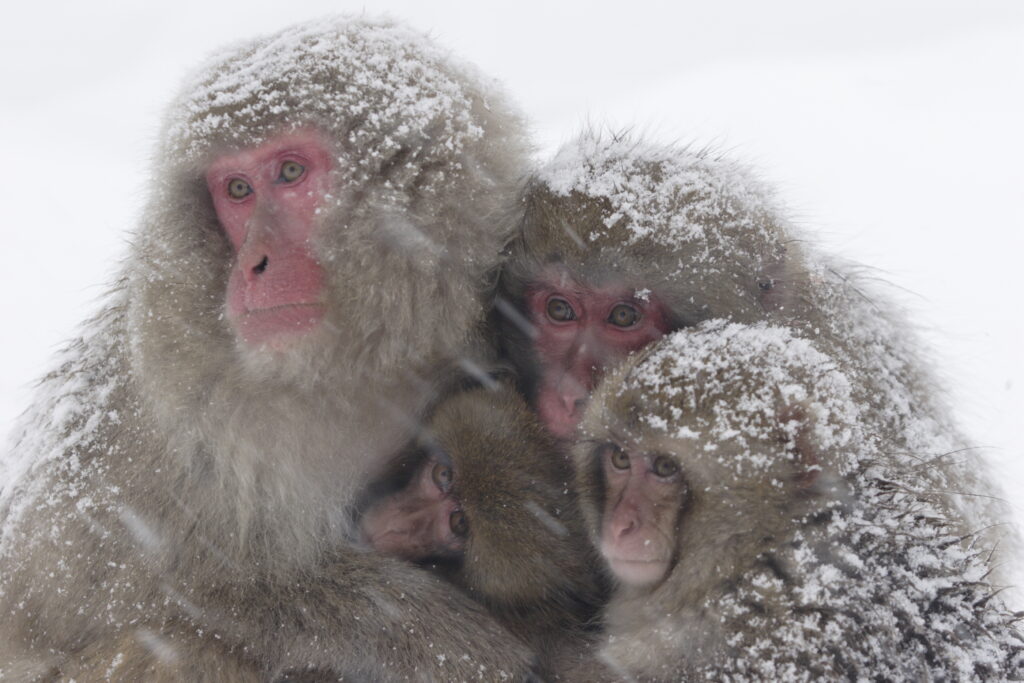
In the Jigokudani area of Nagano Prefecture, one of the heaviest snowfall areas in Japan, where the temperature drops below -10°C, the monkeys take a bath in hot springs while enduring the cold in the deep snow that turns the surrounding area completely white. The name "snow monkey" has become synonymous with the monkeys of Jigokudani Yaen-koen.
The Real Reason to Go to Hot Springs
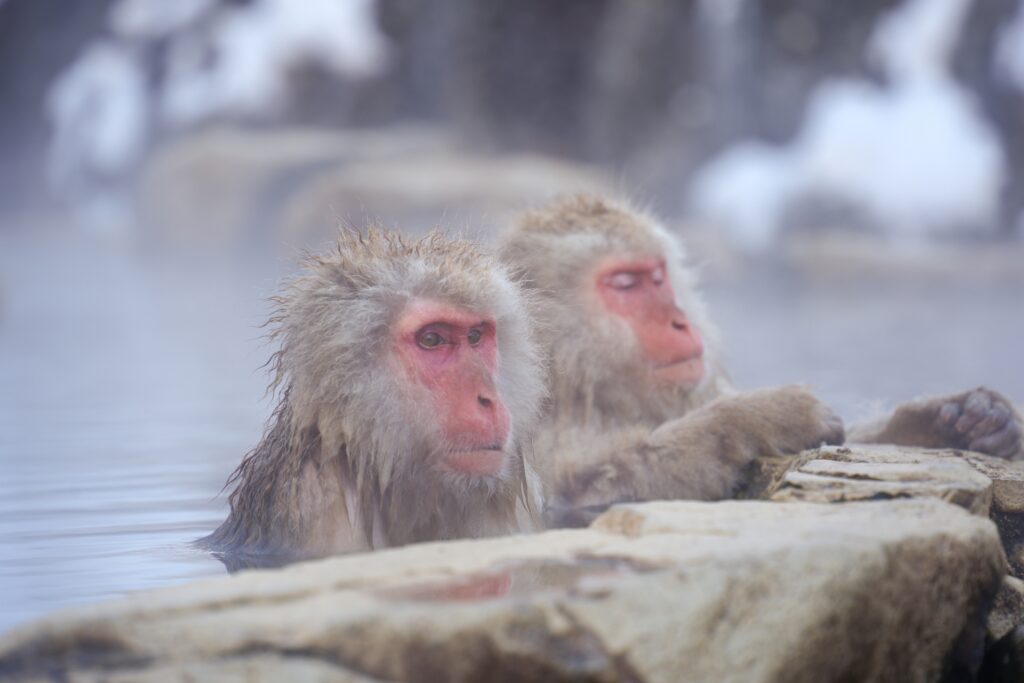
The monkeys in Jigokudani are strikingly unique in the way they bathe in the hot springs. This is their behavior to keep out the cold in the environment of Jigokudani, where the temperature drops below -10℃ in winter. They do not bathe in summer or during the warmer months.
(In summer, the cossals sometimes use the hot springs as a water playground.)
For monkeys, hot springs are just one way to stay warm, and even during the winter season, they spend sunny days basking in the sun. Some monkeys do not like to get wet and do not take a bath.
Some monkeys do not like to get wet, and some monkeys do not take hot spring baths, but only a part of the troop, and many monkeys survive the cold by hugging each other among family members.
Eating food and communicating with their friends are more important to the monkeys who also enjoy hot springs.
For the monkeys, hot springs are not "indispensable and important.
Nor does it have the purpose of cleansing the body as humans do when using a bath. However, in severe cold weather, when the body warms up by soaking in hot water, it feels good, just like humans do.
Social structure to help each other and live together
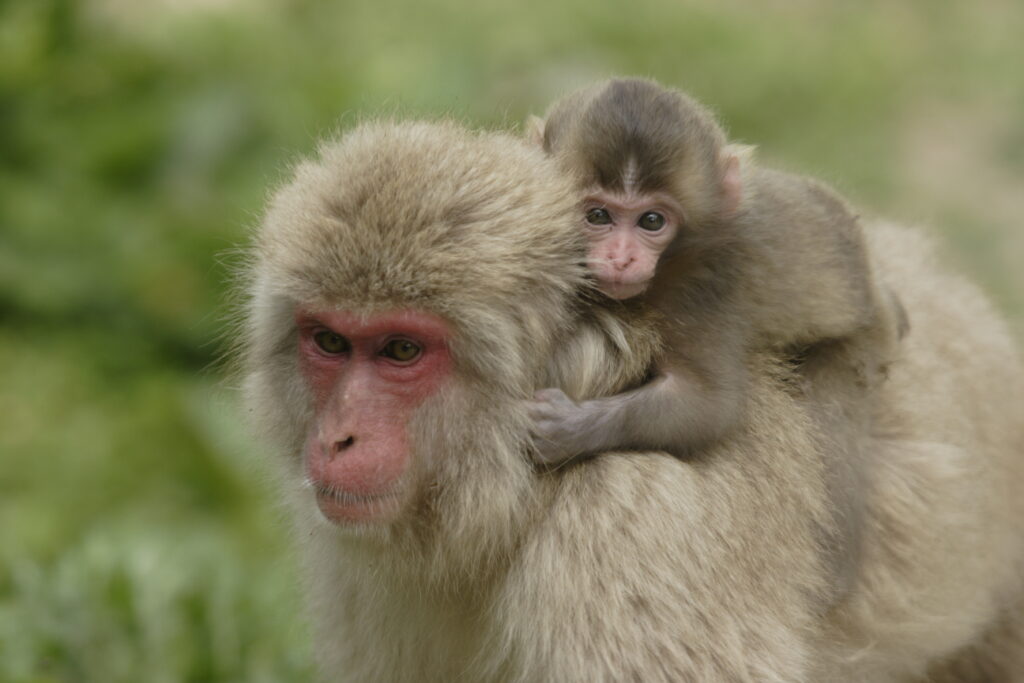
Japanese macaques do not have a specific marital relationship (couple).
During the fall mating season, both males and females mate with multiple partners.
The relationship between mother and offspring is clear because the female has given birth to a child, but the male does not know his own offspring.
(The offspring does not know its father, and the mother does not know the father of her offspring.)
Females remaining in the herd, males leaving the herd
Females basically stay with their natal group (herd) for the rest of their lives, but males leave the herd when they reach sexual maturity at about 5 years of age (although some males remain with the herd after 5 years of age).
The male then becomes solitary, but eventually joins another flock. After a while, he leaves that flock and joins another, and then another, and so on... It seems that males move from one flock to another during their lifetime.
It is thought that this is to avoid the thickening of blood by staying in the same flock.
Rank-based society to avoid conflict
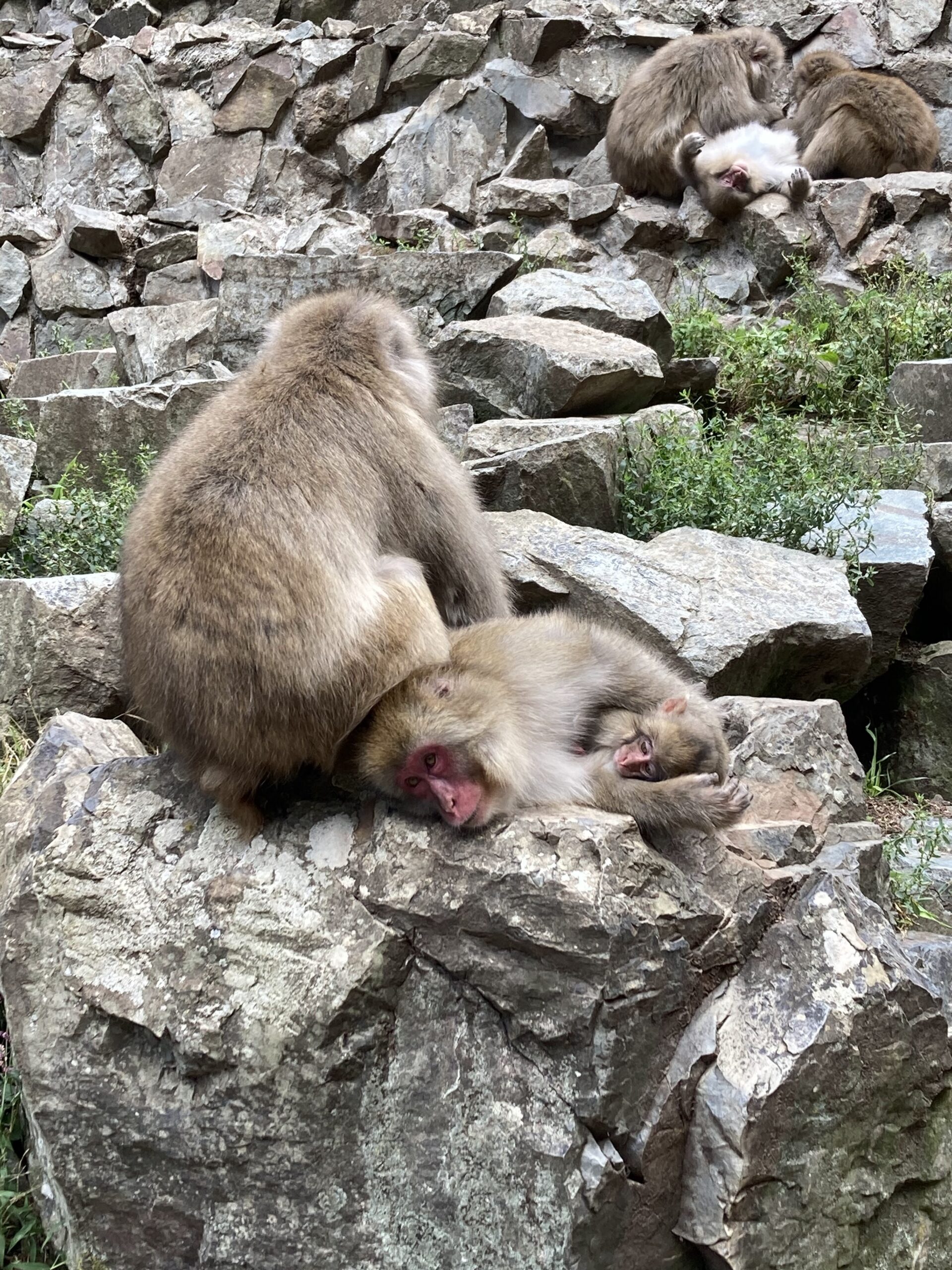
The monkeys have a patrilineal up and down ranking, with the mother protecting her offspring so that the social ranking is influenced by that offspring.
Although it is sometimes perceived as a strict society, it is believed that the ranking system allows lower-ranked people to be reserved for higher-ranked people, thereby avoiding escalation of fights and unnecessary conflicts. It is not that the stronger monkeys dominate by force. It is a society in which both higher-ranking and lower-ranking monkeys depend on each other and help each other.
If good food is available between the top and bottom monkeys, it can be said that the top monkeys have an advantage over the bottom monkeys. However, in the wild, food is dispersed and distributed, so it is difficult for the top monkeys to monopolize food.
The same is true for mating between males and females. Although it is difficult for lower-ranking monkeys to mate with females in the presence of higher-ranking monkeys, lower-ranking males have a chance if the higher-ranking males are not watching, and the higher-ranking males cannot monopolize the females in the troop. Females do not want to mate only with the higher-ranking males, so they may select lower-ranking males to mate with them.
Misinterpretation of "boss monkey."
The first in the order of monkeys is generally called the "boss monkey. However, it is different from a boss who has overwhelming power and is great...like a boss in human society. Since the term "boss monkey" leads to various misunderstandings, they are nowadays called No. 1 male or alpha male (which also means No. 1 male).
Males will eventually leave the group, and when the number one male disappears from the group, the number two male moves up to number one, and so on. In Jigokudani, there are no fierce power struggles for bosses, as is generally imagined. The first-ranked male is not special, but merely a member of the herd.
Edibility and Communication
What are you eating?
Japanese macaques are mainly plant-eaters, about 80% plant-eaters and 20% insect-eaters. (No fish or small animal predation has been observed among the monkeys in Jigokudani.)
How do we interact?
The most important way monkeys obtain information is through sight. Although not so much a language, they also make noises that convey warnings and threats. Living in groups, it is very important for them to understand each other's intentions, and they are skilled at what we call "reading the air" in human society.
Seasonal Living
Japanese macaques are diurnal animals that act during the day and sleep at night.
They lead a "nomadic life" in which they continue to visit within a certain range of activity (a radius of several kilometers).
Spring to early summer
In the mountains, trees are budding and expanding their migratory range in search of new shoots. It is also the birthing season, and one can observe the adorable babies.
autumn
Fruitful season. They will be active in search of nuts. The season of love also coincides with the season of love, which increases the likelihood of not being in the public garden.
winter
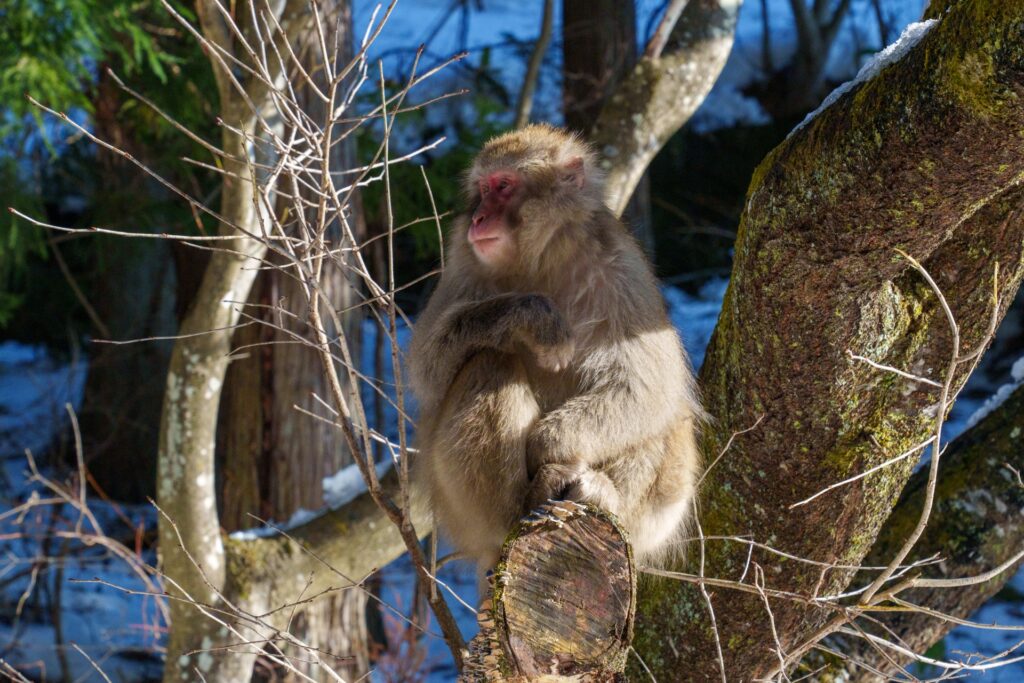
Food is scarce and mobility is difficult, so the range of activities is limited. The symbolic sight of a hot spring bath in a snowy landscape.